

Many homeowners looking into gate installation bedford find that a split-level home needs a different kind of plan. In Bedford, one property may have a raised front entry, a steep drive, and a yard that steps up in layers. Another may have a short wall near the street, a sloped apron, and little flat space at the gate line. A gate has to fit all of that. It cannot be planned by width alone.
That is why a careful bedford gate installation matters so much on these homes. A gate on uneven land has to open with the right space under it, stay lined up at the posts, and handle daily traffic without strain. Metro Gate Repair often sees that split-level lots need more layout work at the start, but that extra care helps the gate work better and last longer.
Understanding Bedford’s Split-Level Property Layouts
A split-level property has more than one ground level near the front of the home. The driveway may slope up from the street and flatten near the garage. The walkway may rise in steps. One side of the frontage may sit higher than the other. These changes may seem small, but they change how a gate should be built.
A split level gate has to match the real shape of the site. The installer has to measure the opening, the grade, the side room, and the space around the gate path. If one side is lower, the frame may need a custom shape. If the entry is narrow, the operator and posts may need a new position. Good residential gate design starts with the land, not with a stock layout.
How Sloped Approaches Affect Gate Swing and Clearance
A slope changes the way a gate moves. A swing gate opens in an arc. On flat ground, that arc is easier to manage. On a grade, the bottom of the gate can move too close to the driveway. It may scrape the surface, bind during motion, or stop before it opens all the way.
This is why driveway gate clearance must be planned with care. A small grade can create a big problem when the gate leaf is long or heavy. A sloped driveway gate may look fine at first, then start rubbing after the hinges settle. When the gate has to fight the slope each day, the opener, hinges, and frame all feel that extra load.
Choosing Between Swing and Sliding Gates for Multi-Level Lots
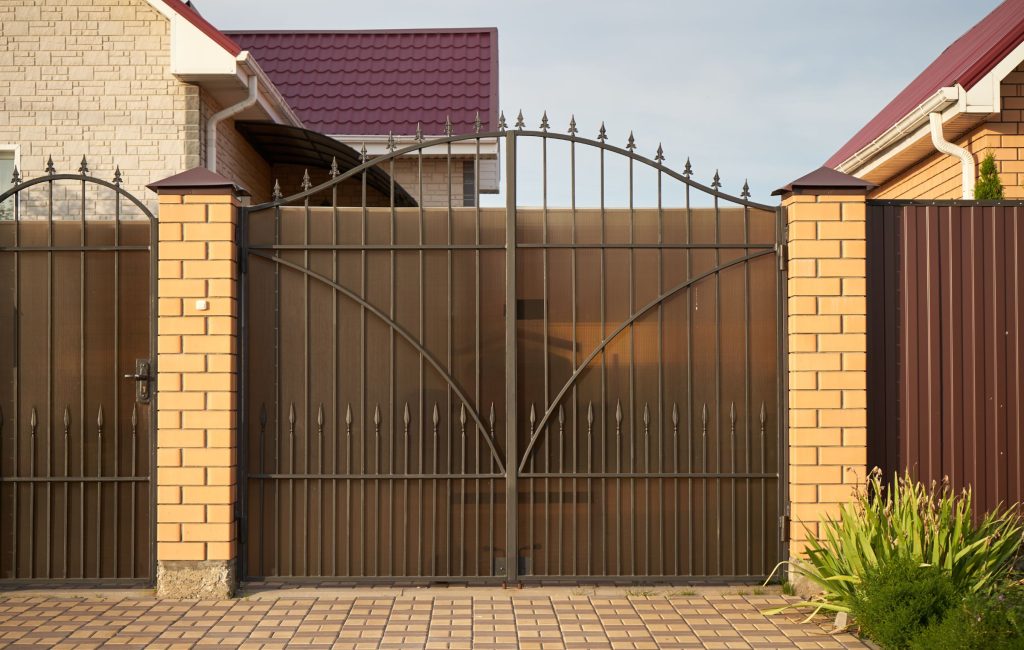
The best style depends on the shape of the entry. A swing gate needs enough room for the leaf to travel across the drive. If the driveway rises fast, that path may be too tight. A sliding gate moves side to side, so it can avoid the swing problem on many split-level lots.
A swing gate bedford layout can still work well when the slope is mild and the entry has enough open room. A sliding gate bedford setup often works better when flat space is limited near the street. Both styles can work, but many split-level homes do best with custom driveway gates made for the exact grade, width, and traffic pattern of the lot.
Driveway Grade, Drainage, and Gate Placement
The grade of the driveway also affects drainage. On a split-level lot, rainwater may run down the drive and collect near the gate opening. If tracks, posts, or motors sit in the wrong spot, water can pool around them. Dirt, leaves, and gravel can then build up and block smooth motion.
Gate placement should follow both the drive layout and the water flow. In some cases, moving the gate a little higher or farther back gives better drainage and cleaner operation. A small change in location can help protect the system from early wear.
Post Depth and Structural Stability on Uneven Ground
Uneven ground creates uneven force on gate posts. One post may sit in firm soil while the other is near fill dirt or a slope cut. That changes how the footing should be built. A shallow footing may seem fine at first, but it can shift after weather changes and daily use.
This is why gate post stability matters so much on split-level property lines. Posts often need deeper concrete, stronger anchoring, and more exact alignment than they would on flat ground. When the posts stay solid, the hinges stay lined up and the gate keeps moving the way it should.
Looking for Professional Gate Repair You Can Depend On?
We provide prompt service and guaranteed quality. Call Now
Designing Gates Around Retaining Walls and Tiered Landscaping
Many Bedford split-level homes have retaining walls, raised planters, steps, or stone borders near the entry. These features add style, but they also take up gate space. A wall may leave little room for a post. A planter may block a swing path. A change in elevation may make it hard to find a good spot for the operator.
The gate also has to leave clear sight lines. Drivers should be able to see the street. Guests should be able to see the keypad or call box. A smart layout shapes the gate around these features instead of forcing the gate into a space that does not suit it.
Material Choices That Work Well on Bedford Elevation Changes
Material choice affects weight, motion, and wear. On a split-level lot, that matters even more because the gate already works against slope and angle changes. A heavy gate may put more stress on hinges, posts, and motors. A lighter gate can often move with less strain.
Aluminum is a common choice because it is lighter than steel and holds up well outdoors. Steel can still be a strong option for wider entries or homes that want a heavier look, but it needs strong support. Wood can add warmth, though it also adds weight. The best choice is usually the one that gives the gate enough strength without adding more load than the site should carry.
Smart Operator Placement for Split-Level Access Points
Operator placement is a big part of good performance. On a split-level entry, the motor, control box, loops, and safety devices all need safe spots. If the motor is set too low, runoff can reach it. If the keypad is placed at a bad angle, drivers may have trouble reaching it from the car.
This is where smart gate access helps with daily use. A good setup gives drivers an easy way in, leaves guests a clear stopping point, and keeps safety devices in the right line of sight. When these parts are placed with care, the gate feels easier to use every day.
Balancing Security With Smooth Daily Access
A gate should add security, but it should still feel easy to use. Split-level homes often have tight approach angles and short flat areas near the street. That means the opening width, gate speed, and stop points all need to match the real way cars enter and leave the property.
A better plan balances protection with comfort. The gate should open far enough for larger family vehicles and close in a steady way without rushing traffic. It should also support normal visitor flow. When the layout matches the home, daily use feels smooth instead of awkward.
A few details help daily access:
- Keep the opening wide enough for the vehicles used most
- Place controls where drivers can reach them with ease
- Match the operator strength to the gate size and weight
- Leave room for guests, service trucks, and deliveries

Curb Appeal Strategies for Elevated Front Entrances
Split-level homes often have a strong street view because the entry sits higher than the road. The stairs, walls, and layered yard draw the eye to the front of the home. A gate should support that look. It should frame the frontage and connect with the lines of the house.
This is where style choices matter. Custom driveway gates can echo roof shapes, railings, trim lines, or fence details. A simple pattern may suit a modern home. A curved top may fit a more traditional one. The height, finish, and shape should all work with the home so the gate feels like part of the full design.
Common Installation Mistakes on Bedford Split-Level Properties
One common mistake is poor grade measurement. If the installer checks only one point of the drive, the gate may be built for the wrong slope. That can lead to dragging, bad latch contact, and more stress on the opener. Split-level lots need full measurement across the whole gate path.
Weak posts are another problem. A gate may look straight on day one, then start to lean after the soil shifts or the weight settles. Other mistakes can shorten gate life fast:
- Too little driveway gate clearance
- Footings that are too shallow
- Tracks placed where water and debris collect
- Hardware set where service access is hard
Planning for Long-Term Maintenance and Adjustment
Even a well-built gate needs care over time. Hinges need checks. Rollers and chains may need small adjustments. Safety devices should be tested. On a split-level property, this routine care helps catch alignment changes before they turn into larger repairs.
A specialized install helps reduce those future problems. When the posts are deep, the frame fits the slope, and the hardware is placed well, the gate is less likely to sag or stick. For Bedford homeowners, that means smoother motion, less wear, and a gate that keeps doing its job year after year.
Frequently Asked Questions (FAQ)
Why does a split-level home need a different gate plan?
Because the driveway, ground height, and entry space change across the lot. Those changes affect swing room, post depth, and hardware placement.
Can a swing gate work on a sloped driveway?
Yes, in some cases. It works best when the slope is mild and the gate is designed with the right clearance and hinge setup.
When is a sliding gate a better choice?
A sliding gate is often better when the driveway rises fast and there is not enough flat room for a swing arc.
Why are stronger posts needed on uneven ground?
Uneven sites place different force on each side of the opening. Stronger support helps the gate stay aligned and move well.
Can a split-level gate still look good?
Yes. A gate can improve both function and curb appeal when its size, style, and placement match the home and lot.
