
Swing Gate vs Sliding Gate for Driveway: Which One Is Actually Worth the Money?
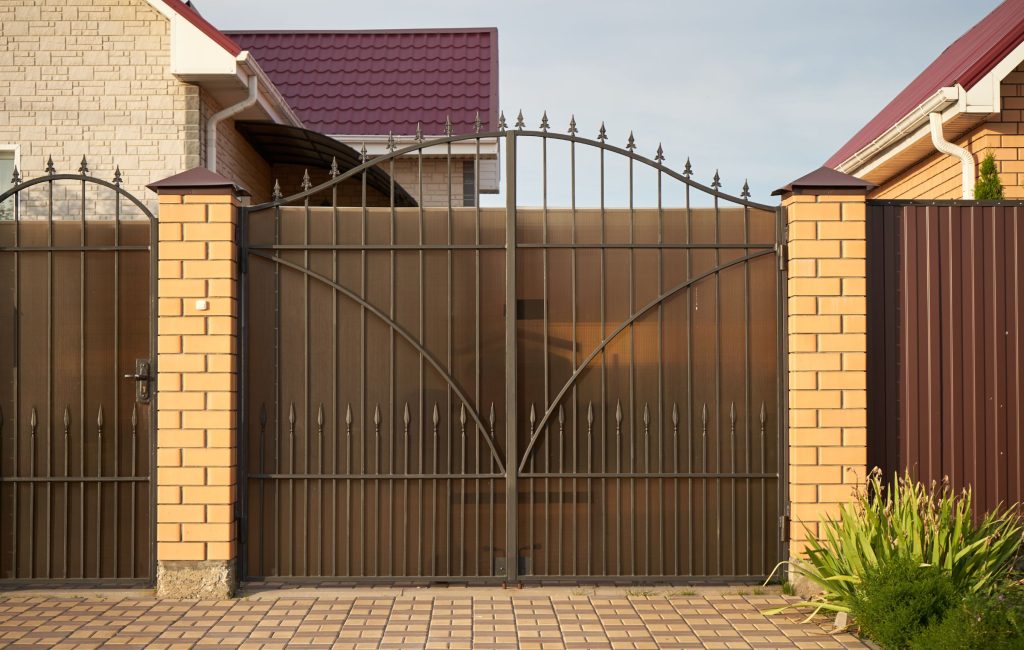
The $2,800 swing gate looks like a steal — until you factor in the concrete work to level the driveway slope, the extra-heavy-duty hinges the budget installer skipped, and the service call six months later when the opener motor burns out from fighting a gate that was never properly balanced. When you’re weighing a swing gate vs sliding gate for driveway use at your Dallas home, the sticker price is the least useful number in the conversation. What actually matters is what you’ll spend over five years. As the team behind Dallas driveway gates installs and repairs across the metroplex, we see the downstream costs of rushed decisions every single season. Why the cheapest gate option almost always costs more over five years Here’s a real pattern we see constantly: a homeowner picks the lower quote, the installer uses builder-grade components, and within 18 months the hinges are sagging, the auto-reverse sensor is misfiring, or the track is warping. A single service call in the Dallas summer heat — diagnostics, labor, parts — typically runs $150–$350. Two or three of those in five years and you’ve already erased whatever you saved upfront. A proper five-year total cost of ownership (TCO) for a driveway gate includes: Initial hardware and installation Automation system (operator, keypad, intercom) Routine maintenance (lubrication, alignment checks, sensor calibration) Unplanned repairs (motor replacement, hinge repair, track realignment) Energy draw for motorized operation When we build that picture for swing versus sliding gates at a typical Dallas property, the gap between them is smaller than most people expect — and sometimes the “cheaper” option ends up costing more in category 4 alone. Looking for Professional Gate Repair You Can Depend On? We provide prompt service and guaranteed quality. Call Now (972) 947-9559 How swing gates and sliding gates actually work (and why it matters for your property) Before you can pick the right type, you need to understand what each system is actually doing mechanically. This isn’t trivia — the operating principle determines which problems you’ll face, how expensive they are to fix, and how long the system lasts. Swing gates A swing gate operates on hinges anchored to posts on either side (or one side, for a single-leaf gate). When the operator activates, one or two panels arc outward or inward along a fixed radius. The mechanical stress concentrates at the hinge points and the operator arm. Swing gates are the older, more intuitive design — most people picture them when they think of an ornamental iron driveway gate. The key vulnerability: hinge wear. In Texas, where temperatures swing from 25°F in January to 105°F in August, metal expands and contracts constantly. Cheap hinges loosen over two to three years. When hinges sag, the gate drags, the operator works harder, and the motor wears out faster. That cascade is the single most common repair scenario we handle. Sliding gates A sliding gate travels laterally along a track (or hangs from a cantilever rail if you want to avoid a ground track entirely). The motor drives a rack-and-pinion or chain mechanism that pulls the panel to one side. The panel itself stays upright — there’s no arcing motion, no hinge stress. The trade-off is real estate: a sliding gate needs a clear run of space equal to the gate’s full width, plus a few feet of margin, along the fence line. A 14-foot sliding driveway gate needs roughly 15–17 feet of clear space on the opening side. If your property line, landscaping, or corner placement doesn’t allow that, sliding is simply off the table regardless of cost. Which gate type fits your driveway layout? This is the question we ask before any other. Layout constraints often make the decision for you, and that’s not a bad thing — it removes the paralysis. Swing gates work best when: Your driveway is level or has a very gentle grade (under 5%) You have adequate setback from the street (the panels need room to swing inward without blocking traffic) Your posts can be anchored in solid concrete footings You prefer a traditional ornamental iron aesthetic Sliding gates work best when: Your driveway slopes noticeably — a slope that would cause a swing gate to drag or gap You want faster open/close cycles (sliding operators typically move at 1–2 ft/sec vs. 0.5–1 ft/sec for swing) You have limited setback from the street but ample lateral space along the fence You’re securing a commercial or high-traffic entry where durability under frequent cycling matters For a deeper look at how these designs fit different property types, our guide on types of gates for homes walks through the full range of options beyond just swing and slide. What swing gates and sliding gates really cost in the Dallas area Let’s put real numbers on the table. These are installed price ranges we see in the market — material, automation, and standard labor, without major concrete or grading work. Swing gate installed cost Single-leaf swing gate (10–12 ft), manual: $1,200–$2,200 Single-leaf swing gate with operator: $2,500–$4,500 Dual-leaf swing gate (12–16 ft) with operator: $4,000–$8,000+ The motorized gate cost rises quickly when you add a quality operator (LiftMaster, FAAC, or Viking) versus a no-name imported unit. Budget operators fail faster — we see them regularly, and replacement often costs more than upgrading to a name-brand unit would have originally. Sliding gate installed cost Sliding driveway gate, 12–14 ft, with operator: $3,500–$6,500 Cantilever sliding gate (no ground track), 12–14 ft: $5,000–$9,000+ The sliding driveway gate cost is higher upfront partly because the hardware is heavier and the installation is more involved. Cantilever systems — which eliminate the ground track entirely — cost more but last longer and handle debris (leaves, gravel, ice) far better than track-based designs. Five-year TCO comparison (typical Dallas residential install) Swing Gate Sliding Gate Install
Signs Your Gate Needs Repair or Replacement: A New Homeowner’s First-Month Checklist

You closed on the house, the boxes are half-unpacked, and somewhere between setting up the internet and finding a plumber, the gate at the end of your driveway slips your mind — until it doesn’t open on a Tuesday morning when you’re already late. Knowing the signs your gate needs repair or replacement before that moment arrives is one of the smartest first-month habits you can build as a new homeowner. If something looks or sounds off, trusted gate repair Dallas TX professionals can tell you in one visit whether you’re looking at a minor fix or a full replacement. Here’s exactly what to inspect, what the warning signs mean, and how to decide your next step. Your First 30 Days: What to Check on a Gate You Just Inherited Think of this as a gate audit. Do it once, write down what you find, and you’ll have a baseline to reference every time something changes. Week 1 — Visual walk-around Walk the entire gate and fence line in daylight. Look for rust, cracks in welds, bent frame sections, or posts that lean even slightly. A leaning post is never cosmetic — it shifts load onto the hinge side and accelerates wear on every other component. Week 2 — Operational test Run the gate through 10 open-and-close cycles at different times of day (morning cold, afternoon heat). Dallas summers push temperatures past 100°F, and a gate that works fine at 8 a.m. may bind or stall by 2 p.m. if the metal has expanded against a misaligned stop bolt. Week 3 — Electrical and hardware check Look at the control box. Is there corrosion on the terminals? Are the battery backup terminals swollen or leaking? Check the photo-eye sensors — they should be clean, aligned, and free of spider webs (not a joke; we clear sensor nests at least twice a week in the warmer months). Week 4 — Gate and fence repair assessment Now that you’ve watched it operate for three weeks, you have context. Any issue that showed up more than once is a pattern, not a fluke. Patterns need professional attention before they become failures. This is also a good time to assess the full gate and fence repair picture — sometimes the fence posts are the root cause of a gate problem. Physical Warning Signs You Should Never Ignore After doing hundreds of inspections across the Dallas area, we see the same physical red flags over and over. Catching any one of these early can cut your repair bill significantly. Visible rust or cracked welds Surface rust on a decorative iron gate is normal and treatable. Deep rust that has pitted the metal — especially at weld joints — is a structural problem. A cracked weld at the hinge plate or frame corner means the gate is slowly pulling itself apart under its own weight. Welding repair can restore it, but only if the surrounding metal is still sound. Sagging or dragging A gate that drags the ground on the latch side has almost always lost hinge integrity or has a post that has shifted. Every time it drags, it grinds the bottom rail and puts torque stress on the opener motor. Left alone, you’ll eventually replace both the gate and the motor. Bent or warped frame sections This one often comes from a vehicle strike — even a slow bump from a delivery truck can bend a vertical picket enough to bind the gate in its track. If a sliding gate has a bend in the bottom rail, the wheels will skip and the operator will strain every cycle. Looking for Professional Gate Repair You Can Depend On? We provide prompt service and guaranteed quality. Call Now (972) 947-9559 Electrical and Mechanical Red Flags on Automatic Gates Automatic gates fail differently than manual ones, and the symptoms can be subtle right up until the gate stops working entirely. The gate reverses for no reason. This is almost always a sensor issue. Dirty or misaligned photo-eyes tell the control board there’s an obstacle in the path, triggering a safety reversal. Understanding how automatic gate sensors work helps you know whether a cleaning and re-alignment fixes it or whether the sensor itself has failed. The gate moves slower than it used to. Operators have thermal protection built in — they slow down or stop when the motor overheats. If your gate is sluggish every afternoon in summer, the motor is working too hard. That’s usually a sign of mechanical friction somewhere: worn wheels, a dirty rack, or low chain tension. You hear grinding, clicking, or a high-pitched whine. Grinding usually means metal-on-metal contact — a wheel bearing, rack gear, or hinge pin that has lost its lubrication. Clicking from the control board often points to a relay failing to engage. A whine on a swing gate operator is typically the gearbox telling you it’s near the end of its service life. The gate works on one remote but not another. Before you assume the operator is failing, check the simpler explanation: the non-working remote needs a battery or a re-pairing. If both remotes and the keypad all have intermittent issues, the receiver board or antenna is the likely culprit. For driveway gate repair Dallas situations specifically, we find that most electrical failures come down to three causes: moisture intrusion in the control box, a failing battery backup, or a corroded connection at the ground terminal. Repair vs. Replace: How to Make the Right Call This is the question we get more than any other, and the honest answer is: it depends on metal condition, operator age, and cost ratio. Repair makes sense when: The frame and posts are structurally sound (no deep rust, no weld cracks) The operator is under 8–10 years old The repair cost is less than 50% of a replacement quote The gate style matches your
How Gate Repair in Heath TX Works Step by Step
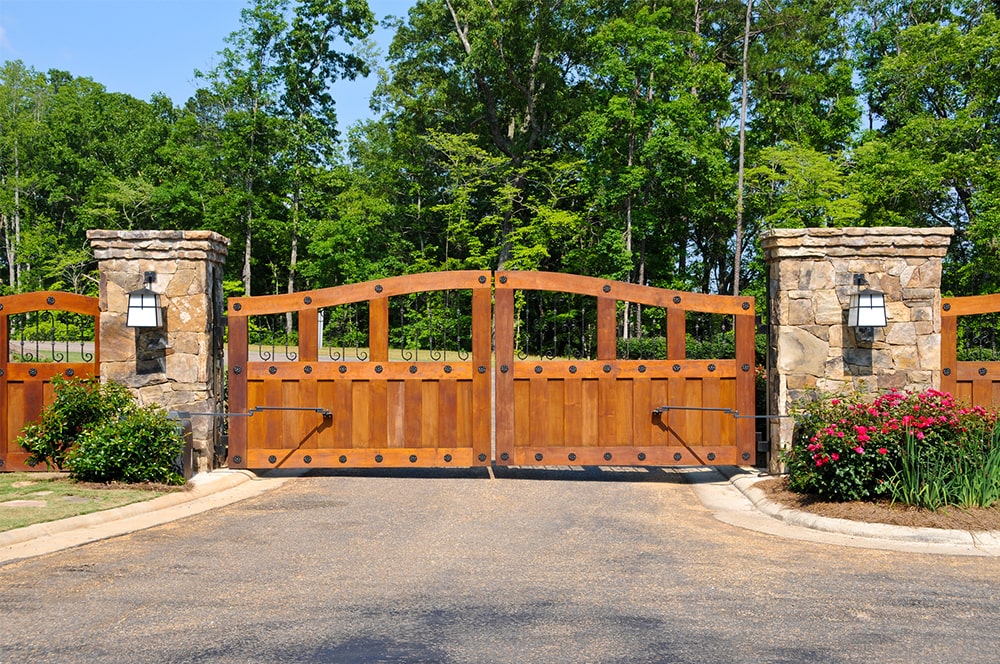
Over the past five years, we’ve watched automatic gates shift from a luxury feature on custom estates to a standard fixture on middle-of-the-road subdivisions and everyday residential driveways across the eastern Dallas suburbs. That’s great for security — but it also means a lot more homeowners are now dealing with gate failures without any background in how these systems actually work. If you’ve been searching for gate repair Heath and wondering what the process actually looks like before you hand someone a house key and a service fee, this article is exactly what you need. Here’s a plain-language, step-by-step look at how we handle a gate repair job from the moment we arrive to the moment we pack up. How the Gate Repair Industry Has Changed Over the Last Five Years Five years ago, the majority of service calls we handled in the Heath area involved basic swing gates with simple loop-detector openers. The diagnostics were straightforward and the parts were universal. Today, the landscape looks completely different. Homeowners are installing smarter, heavier, and more mechanically complex systems — slide gates with high-torque operators, bi-fold designs, solar-powered setups, and gates integrated with app-controlled access systems. The hardware has improved, but that complexity means there are more failure points and more variables to diagnose. What this means for you as a homeowner: repair jobs today require a technician who can read control board error codes, test solar trickle voltage, evaluate weld integrity on heavier frames, and troubleshoot wireless receivers — not just tighten a hinge and call it done. A general handyman who “knows gates” from five years ago may not have the toolkit or training to work on your current system. That gap is worth knowing before you book anyone. What Happens During the Initial Inspection We don’t start wrenching the moment we pull into your driveway. The first 10 to 20 minutes of any service call is pure observation and testing — and honestly, this phase tells us about 70% of what we need to know. Here’s what a thorough inspection covers: Visual structural check. We walk the full gate panel, looking for bent frames, cracked welds, warped posts, and rust penetration. A gate that’s sagging on one side almost always has a hinge failure or a post that’s shifted in the ground — and that structural issue has to be addressed before we touch the operator, or the motor will burn out again within months. Operator and control board check. We power-cycle the system, note any error codes on the control board display, and listen to the motor during the open and close cycle. A grinding sound on startup usually means a worn gear set. A gate that reverses immediately after starting to close is almost always a sensor or limit-switch issue. Wiring and connections. Corrosion on terminal blocks and loose wire connections cause a surprising number of “dead gate” calls. We check every connection point, especially on systems that are three or more years old. Obstruction and loop detector test. We run a vehicle or a metal plate across the inductive loop embedded in your driveway surface to confirm it triggers the exit cycle correctly. A failed loop is one of the most misdiagnosed problems we see — people assume the motor is bad when the loop just needs a new detector card. Understanding how automatic gate sensors work helps explain why this sensor check matters so much. When a safety sensor is out of alignment or failing, the gate gets a false “obstruction” reading and refuses to close — or worse, reverses into a vehicle. The Most Common Repairs We Find on Heath Gates Heath’s climate is a real factor. The area gets a full Texas summer — heat that warps aluminum panels and cooks motor capacitors — followed by occasional hard freezes that crack PVC conduit and stress hinge welds. Here’s what we fix most often: Failed motor capacitors. These are the single most common repair on swing gate operators. The capacitor gives the motor its starting torque; when it goes, the gate hums but won’t move. Replacement typically takes under an hour. Broken or bent hinge arms. Heavy gates with undersized hinges eventually crack at the weld point. We cut out the failed section and re-weld, or replace the full hinge arm depending on the damage. Worn drive gears. Slide gates with rack-and-pinion drives develop gear wear over time, especially when debris builds up in the rack channel. We clean the rack, inspect the pinion, and replace whichever component shows excessive wear. Control board failures. Lightning strikes in Rockwall County are no joke. A nearby strike can fry a board even with a surge protector. We stock common replacement boards and can usually swap one same day. Safety edge and photocell misalignment. Both of these components drift over time, especially on gates with a lot of daily cycles. Realignment is quick, but skipping it creates a genuine safety hazard. Looking for Professional Gate Repair You Can Depend On? We provide prompt service and guaranteed quality. Call Now (972) 947-9559 How the Actual Repair Work Gets Done Once the inspection gives us a clear diagnosis, we explain exactly what we found and give you a quote before touching anything. No surprises. Here’s how the work typically flows: Parts sourcing. We carry the most common components in our service vehicles — capacitors, loop detector cards, photocell pairs, hinge hardware, and a selection of control boards. For less common components (specific OEM boards or custom-length hinge arms), we usually turn those around within one to two business days. Structural welding on-site. Cracked welds don’t require hauling your gate to a shop. We carry a MIG welder in our truck and can handle most weld repairs on location. After welding, we grind the bead smooth and apply a rust-inhibiting primer so the repair doesn’t become a rust point six months later. Electrical work.
How Much Does Gate Repair Cost in Forney? Real Price Ranges Explained

Most homeowners in Forney don’t think about their gate insurance coverage until a storm rolls through or a car clips the opener post — and by then it’s too late to plug the gaps. If you’ve been searching for gate repair Forney pricing, the cost question is only half the picture. The other half is whether any of that bill is actually covered, and most policies have more exclusions than people realize. Let’s break down how much does gate repair cost in Forney, what your insurance is likely to dodge, and how to protect yourself both at the policy level and at the repair level. What Most Homeowner Policies Won’t Cover on Gate Damage Here’s the part nobody wants to hear until they’re already filing a claim: standard homeowner insurance policies treat gates inconsistently, and the exclusions are buried in the fine print. Mechanical and electrical breakdown is almost universally excluded. If your automatic gate motor seizes up, a board on your control panel fries, or your limit switches wear out from five years of daily cycles, that’s considered normal wear and tear — not a covered loss. Don’t expect a check. Gradual deterioration is another common exclusion. A wood gate that’s been rotting at the posts for two seasons, or a wrought iron gate showing rust damage that’s been spreading for years, will typically be denied. Insurers call this “failure to maintain,” and they lean on it hard. Vehicle impact — by the homeowner is tricky. If you back into your own gate, some policies cover it under collision (not homeowners), and others exclude it entirely if it’s considered your own property damage. We’ve seen clients get caught in this gap more than once. Flood and storm surge damage may require a separate flood rider. A heavy Texas storm that pushes standing water into your gate’s underground electrical conduit? That’s often not covered under a basic policy, even if wind damage is. What IS typically covered: sudden, accidental damage from named perils like fire, lightning, vandalism, and sometimes windstorm. Even then, you’ll need solid documentation. Common Claim Scenarios — and Where They Fall Apart Let’s walk through the calls we actually get after claim denials in the Forney and Kaufman County area. Scenario 1: Storm damage. A severe thunderstorm bends a sliding gate off its track and snaps the arm on the opener. This is often claimable under windstorm coverage — IF you can prove the storm caused it and the gate was in working condition beforehand. Scenario 2: Vehicle collision. A delivery truck clips the gate post and shears the hinge. This should be covered under the driver’s auto liability — but only if you get their insurance information and file a claim against their policy, not yours. We’ve had clients skip this step and get stuck with the full repair bill. Scenario 3: Power surge. A lightning strike nearby sends a voltage spike through your gate’s control board. This is covered under some policies as “lightning damage” but excluded under others as an “electrical event.” The language varies wildly by carrier. Scenario 4: The gate just stopped working. No storm, no impact — the motor just gave out. This is the most common call we get, and it’s the one insurance almost never touches. That repair is coming out of pocket, full stop. Looking for Professional Gate Repair You Can Depend On? We provide prompt service and guaranteed quality. Call Now (972) 947-9559 How to Document Gate Damage the Right Way If you want a legitimate claim to hold up, documentation is everything. Here’s what we tell every Forney customer before they call their insurer. Photograph everything immediately. Don’t touch or move anything until you have photos from multiple angles. Include close-ups of the impact point, wide shots showing context, and photos of any surrounding damage (downed branches, tire marks, debris). Get a written repair estimate fast. Insurance adjusters respect itemized estimates from licensed gate repair professionals. A vague quote scribbled on a napkin won’t cut it. Ask for a line-by-line breakdown: labor, parts, any code-compliance upgrades required. Record the date and time. Cross-reference it with local weather reports if the damage is storm-related. Insurers will pull those records anyway — you want to be ahead of them. Save all communications. If a third party caused the damage (delivery driver, contractor, neighbor), get their name, insurance carrier, and policy number on the spot. Request a written denial if you’re turned down. This matters if you plan to appeal or escalate to the Texas Department of Insurance. What Gate Repair Actually Costs in Forney: Real Price Ranges Now for the numbers you came here for. These are real-world figures we see regularly in the Forney market — not national averages pulled from a spreadsheet. Minor Repairs: $150–$350 This covers basic hinge tightening, bolt replacement, minor weld touch-ups on a steel gate, or resetting a misaligned track. These are typically same-day fixes that take under two hours. Opener and Motor Repair: $200–$600 Replacing a burned-out control board runs $200–$350 depending on the brand. A full motor replacement on a mid-range residential opener lands in the $350–$600 range. We’ve seen homeowners quoted far higher elsewhere — always ask for the parts markup to be itemized. Gate Realignment and Track Work: $250–$500 A sliding gate that’s jumped its track or a swing gate with sagging hinges falls here. If the post itself has shifted (common in Forney’s expansive clay soil), expect that number to climb toward $500–$700. Sensor and Wiring Repair: $150–$400 Understanding how automatic gate sensors work helps you have an informed conversation with your technician. Sensor replacement is usually inexpensive — it’s tracing and repairing damaged wiring buried underground that adds cost and time. Structural Damage and Collision Repair: $500–$2,000+ When a vehicle impact bends a gate panel, shears a post, or destroys the opener mounting
How to Choose a Gate Repair Company in Dallas: Vet Before You Hire

The average Dallas homeowner pays between $180 and $550 for a professional gate repair — and a surprising number of them pay twice because they hired the wrong company first. Knowing how to choose a gate repair company in Dallas is genuinely worth your time before you hand anyone a check. If you already know you need help fast, Gate Repair Dallas is what we do every day — but read this first so you understand exactly what a fair deal looks like. What a Legitimate Gate Repair Estimate Actually Looks Like (Line by Line) Before you can evaluate any company, you need to know what a real estimate includes. Here’s how a transparent quote breaks down on a typical job: Service call / diagnostic fee: $75–$125. This covers the technician’s drive time, truck overhead, and the first 30 minutes of diagnosis. Any company that waves this fee entirely is either padding it elsewhere or cutting corners on the diagnostic. Labor: $85–$150 per hour. Most standard repairs run 1–2 hours. Complex welding repairs or full motor swaps can push to 3–4 hours. Get a not-to-exceed number in writing. Parts: varies widely. A replacement hinge or roller? $15–$40. A new control board for an automatic gate? $120–$350. A LiftMaster or DoorKing motor? $300–$700+. Ask for the part number so you can verify it’s OEM or an approved equivalent. Overhead and margin: This is built into the hourly rate and is completely normal. A licensed, insured company with a stocked truck has real costs — insurance, fuel, tools, certifications. That’s why their rates are higher than a guy off Craigslist. If a quote is one flat number with no breakdown, push back. A professional won’t be offended by “Can you show me what’s labor and what’s parts?” If they bristle at that question, that’s your first red flag. The 5 Questions Every Dallas Homeowner Should Ask Before Signing Anything We’ve been doing dallas gate repair long enough to know the questions most homeowners wish they’d asked. Here they are — plain and direct: 1. Are you licensed and insured in Texas? This is non-negotiable. Ask for a certificate of insurance (COI) that names general liability and workers’ compensation. If a tech gets hurt on your property and they’re uninsured, you could be liable. A legitimate company sends this without hesitation. 2. Do you specialize in gates, or are gates a side service? There’s a meaningful difference. A company that does fences, garage doors, and “whatever else” on the side often lacks the depth to properly diagnose a failing control board or a misaligned rack-and-pinion on a sliding gate. Ask specifically: “How many gate jobs does your crew handle per week?” If the answer is vague, dig in. 3. What’s your warranty on parts and labor? Industry standard is 90 days on labor and at least the manufacturer’s warranty on parts (often 1 year). Some companies offer 6-month labor warranties — that’s even better. Get it in writing on the invoice. 4. Can you provide a reference from a similar job in the Dallas area? Any reputable company doing automatic driveway gates dallas tx work should be able to name a handful of neighborhoods they service regularly. They don’t need to give out a customer’s home address — a business reference or a verifiable Google review profile is fine. If they have zero reviews and no references, be cautious. 5. Who’s actually showing up — your employee or a subcontractor? Some companies book the job and then dispatch whoever’s available from a pool of subs. That’s not automatically bad, but you deserve to know. Subcontractors should still be vetted and insured through the company. Ask how they vet the people entering your property. Looking for Professional Gate Repair You Can Depend On? We provide prompt service and guaranteed quality. Call Now (972) 947-9559 Red Flags That Tell You to Walk Away Fast After a decade in this industry, I can spot a bad actor within five minutes of the first call. Watch for these: Pressure to decide on the spot. A real technician diagnoses, quotes, and gives you time to think. “This deal’s only good today” is a classic pressure tactic — and it’s a lie. Your gate’s condition won’t change in 24 hours. No written estimate. Verbal-only quotes almost always balloon when the invoice arrives. Insist on a written quote before any work starts. Full stop. Extremely low hourly rates (under $60). It sounds great until you discover they’re billing 6 hours for a 90-minute job, using off-brand parts, or skipping steps on the wiring. Low rates often mean slow or sloppy work. No physical address. Search the company name. If there’s no verifiable business address — just a phone number and a website — that’s a concern. It doesn’t mean they’re fraudulent, but it does mean there’s no accountability if something goes wrong. They can’t name the gate brand or motor they’re working on. If you say “it’s a LiftMaster RSL12U sliding gate opener” and they respond with blank silence, that’s a sign they’re not a gate specialist. Understanding the types of gates for homes and their corresponding hardware is day-one knowledge for any real pro. What Separates a Gate Specialist from a General Handyman This distinction matters most when your issue is electrical or mechanical — which is most of the time with automatic gates. A general handyman can handle a sagging gate hinge or a broken weld on a simple swing gate. For anything that involves a motor, control board, safety loop, or remote system, you need someone whose whole business is gates. Here’s why: Diagnostic accuracy. Gate systems fail in cascading ways. A control board that seems dead might actually be fine — the real culprit is a corroded safety loop wire triggering a fault code. A specialist reads those fault codes. A handyman replaces the board and charges you $300 for nothing.
Signs Your Electric Gate Needs Repair: When to Call a Pro in Dallas

Before you hand anyone a key to your property — or a service call fee — ask the right questions. Knowing the signs your electric gate needs repair is only half the battle; the other half is making sure the technician you call actually knows what they’re looking at. If you own electric gates Dallas properties rely on every day, both of those things matter equally. Before You Hire Anyone for Gate Repair, Ask These 6 Questions We’ve been doing this work in the Dallas area for over a decade, and the calls we get after a bad repair experience are always frustrating — not because the problem is unfixable, but because it didn’t have to get worse. Use these six questions to separate the pros from the guessers before anyone touches your gate. “What type of gate operator do you work on?” Green flag: They name specific brands — LiftMaster, GTO, Apollo, FAAC — and describe what they typically see fail on each. They know that a LiftMaster SL3000 has different failure points than an Apollo 1500. Red flag: They say “we work on all brands” without any specifics. That’s the answer someone gives when they’ve watched three YouTube videos. “Can you diagnose before you quote?” Green flag: Yes, and they explain what a diagnostic involves — checking the control board, testing the loop detectors, reading error codes on the operator, inspecting the mechanical components. Red flag: They quote you a flat repair price over the phone without seeing the gate. Every gate failure has a root cause; a real tech finds it before pricing it. “Do you carry parts on the truck?” Green flag: They stock common boards, capacitors, limit switches, and safety sensors. Same-day repairs are often possible because the part is already on the van. Red flag: They need to “order the part and come back.” That’s fine for specialty items, but if they don’t have a replacement control board for a common operator, that’s a gap in their operation. “Is my gate worth repairing, or should I replace the operator?” Green flag: They walk you through the math — repair cost vs. the age and remaining lifespan of the operator. An honest tech will tell you when replacement makes more sense financially. Red flag: They push repair-only every time, or push replacement every time. Neither is always right. “Are you familiar with sliding gates vs. swing gates?” Green flag: They explain the mechanical differences — a sliding gate’s rack-and-pinion drive vs. a swing gate’s arm or underground actuator — and describe common failure points for each. Red flag: They treat them as interchangeable. They’re not. A technician who doesn’t understand how types of gates for homes differ mechanically will miss problems specific to your setup. “What’s your warranty on parts and labor?” Green flag: At least 30 days on labor, 90 days or more on parts. They put it in writing. Red flag: No warranty, or a verbal-only promise. If a repair fails in two weeks and there’s nothing in writing, you’re paying again. Warning Signs Your Electric Gate Is About to Fail Once you’ve got the right technician in mind, you need to know what to tell them. These are the symptoms we hear about most often on Dallas residential and commercial properties — and what they usually mean. The gate moves slowly or hesitates A gate that used to zip open in four seconds and now takes eight is telling you something. Usually it’s a failing motor capacitor, a worn drive gear, or a rack that needs lubrication. Left alone, the motor eventually overheats trying to compensate and burns out entirely. It reverses before fully opening or closing This almost always points to a safety sensor or loop detector issue. The system thinks something is in the path, so it reverses. If this happens intermittently, check for leaves, dirt, or debris near the sensors first — but if cleaning doesn’t fix it, the sensor itself may be failing. Understanding how automatic gate sensors work helps you describe the problem accurately when you call. You hear grinding or scraping sounds On a sliding gate, this usually means the bottom roller is worn or the rack gear is damaged. On a swing gate, it can be a binding arm or a hinge that’s shifted. Either way, metal-on-metal contact accelerates wear fast — don’t ignore it. The gate only responds intermittently to the remote or keypad Random response issues point to the control board, a failing receiver, or interference from a nearby device. If the gate works fine manually (using the release handle), the mechanical side is probably okay and you’re dealing with an electrical or electronic fault. You see rust, cracks, or visible damage to the frame This is a gate-and-fence repair problem that goes beyond electronics. A structurally compromised gate puts stress on the operator and can cause the entire system to fail. We often find that operators burn out prematurely because the gate frame warped and the motor was fighting the weight every single cycle. Looking for Professional Gate Repair You Can Depend On? We provide prompt service and guaranteed quality. Call Now (972) 947-9559 Repair vs. Replace: How to Make the Right Call Here’s the honest framework we use with every customer. Repair if: The operator is less than 7–8 years old The failure is a single identifiable component (board, capacitor, sensor) The repair cost is less than 50% of a new operator installation Replace the operator if: It’s over 10 years old and showing multiple issues at once The control board has failed and a replacement board costs more than half the unit’s value The motor has burned out and the rest of the system is also showing wear Replace the entire gate if: The frame is structurally damaged, badly rusted, or has been hit by a vehicle The gate no longer aligns properly on its track or hinges
How Gate Installation Works Step by Step: What to Expect in Flower Mound

A $2,800 gate quote sounds a lot better than a $4,500 one — until that bargain crew leaves without properly setting the post depth, and six months later your swing gate is dragging the driveway and pulling itself out of the ground. We’ve seen this exact scenario play out dozens of times. Understanding how gate installation works step by step — before you hire anyone — is the single best way to protect your investment and make sure the job gets done right. If you’re researching gate installation Flower Mound, this guide walks you through exactly what a professional installation looks like, from the first site visit to the final test swing. Why the Cheapest Gate Quote Usually Costs You More in the Long Run Let’s be honest about what low bids actually buy you. A crew that quotes $1,000 under the market rate is cutting costs somewhere — and in gate work, that almost always means shallower post holes, lighter-gauge steel, undersized concrete footings, or skipped electrical conduit. Each of those shortcuts creates a compounding problem. Surface cost vs. total cost over five years: Budget Install Professional Install $2,800 upfront $4,400 upfront Operator replaced at 18 months: +$900 Operator still running at year 5 Post reset due to lean: +$650 Posts solid, no movement Gate re-welded at hinge: +$400 Original welds intact 5-year total: ~$4,750 5-year total: $4,400 That math plays out consistently in our experience. The “cheap” job costs more by year two, and the homeowner usually doesn’t connect the dots until they’re calling us for the third repair on a gate that’s barely two years old. Good value isn’t the lowest number on paper. It’s a gate that opens reliably on day one and day 1,825. The steps below show you what a legitimate installation actually involves — so you know exactly what you’re paying for. How Gate Installation Works Step by Step — The Full Process Here’s the honest, ground-level breakdown of what happens when a qualified crew does this job correctly. Step 1: Site Assessment and Gate Selection Before anyone digs a hole, a professional installer walks the property. They’re looking at driveway slope (even a 2-degree grade changes how a swing gate behaves), soil type, existing fence alignment, utility line locations, and the distance to your home’s electrical panel. Gate type matters enormously here. A swing gate needs a flat or near-flat approach and enough clearance to arc open. A slide gate requires a clear run along the fence line equal to the gate’s full width, plus a bit more. If you haven’t settled on a style yet, our guide to types of gates for homes breaks down the practical trade-offs for each option. Step 2: Layout and Marking Once the scope is agreed on, the crew marks post locations and excavates. Post hole depth is not a suggestion — it’s structural. In the DFW area, we typically dig 42 to 48 inches deep for a gate post supporting an automated operator. That accounts for our clay soil, which shifts with moisture. A shallow hole in Texas clay is a leaning post within 12 to 18 months, guaranteed. Step 3: Setting Posts and Footings Posts go in plumb — checked with a level on two planes, every time. Concrete is mixed to the right consistency and poured carefully to eliminate air pockets. Then the crew walks away. Real concrete needs a proper cure time: typically 24 to 48 hours minimum before any load goes on those posts. Any installer who hangs a heavy gate the same day they pour concrete is cutting a corner you’ll feel later. Step 4: Welding and Gate Hanging After the posts have cured, the gate panels are hung and adjusted. If you’re getting a custom-fabricated gate, the fabrication shop work is already done and the crew is fitting finished panels. Hinges are welded or bolted depending on the gate weight and design. The gate should swing or slide smoothly, with equal clearance at the top and bottom, before a single wire is run. Step 5: Operator and Electrical Installation The opener gets mounted to the post or to a pad, depending on the model. Underground conduit runs from the operator to the electrical source — done by licensed electricians on our crews, not just gate guys who “do electrical too.” A proper gate operator installation includes correct wire gauge for the run length, weatherproof junction boxes, and a dedicated breaker where the manufacturer requires one. What Happens Before the Crew Ever Breaks Ground The pre-installation phase is where most homeowners have zero visibility — and where a lot of shortcuts hide. Permit check: Flower Mound has specific ordinances around gate setbacks and fence heights. A responsible installer confirms permit requirements before the first shovel hits the dirt. If your installer says “we never pull permits for gates,” that’s a red flag. Unpermitted work can cause issues if you sell your home. Utility locate: Texas law requires 811 notifications before any digging. A legitimate crew requests a utility locate and waits for the clear before excavating. Non-negotiable. HOA approval: Many Flower Mound neighborhoods have HOA covenants that specify gate materials, colors, or styles. We always ask clients to confirm approval before we schedule. An HOA rejection after installation means removal costs on top of everything else. Post-Installation: Programming, Testing, and Final Walkthrough This is where a quality installation separates itself from a rushed one. After the operator is wired and mounted, the installer programs travel limits — the exact points where the gate stops in the open and closed positions. Set these wrong, and the gate slams its own stops or reverses before fully opening. Obstacle detection is calibrated next. Understanding
How Much Does Gate Installation Cost in Farmers Branch: A Real Price Breakdown

You’ve got a budget in hand, a gap in your fence line, and a nagging question: can you handle this yourself, or is professional installation worth the extra spend? If you’re researching gate installation Farmers Branch, knowing how much does gate installation cost in Farmers Branch — honestly, not just ballpark — is the only way to make a smart decision. Here’s a no-filler breakdown from someone who’s quoted hundreds of these jobs across the Dallas area. DIY vs. Pro Gate Installation: An Honest Cost Matrix Let’s start with the tradeoff nobody lays out clearly. DIY gate installation isn’t inherently foolish — for some setups, it saves real money. For others, it costs you twice what a pro would have charged. Here’s how to read the matrix honestly. The Cost Matrix Scenario DIY Total Cost Pro Total Cost Verdict Basic manual wood gate, existing posts $200–$450 (materials + hardware) $600–$1,000 (labor + materials) DIY can make sense New driveway gate with post setting $500–$900 (materials + concrete) $1,200–$2,500 Pro edges out if you value your weekend Automatic/electric gate with opener $1,000–$1,800 (kit + materials) $2,500–$5,500+ Pro almost always wins on reliability Commercial swing or slide gate $2,000–$4,000+ (materials alone) $4,500–$10,000+ Pro is non-negotiable The Risk Matrix DIY wood gate on flat ground with existing posts? Low risk. But the moment you’re setting new posts in DFW clay soil — which expands and contracts dramatically — the risk spikes. Improperly set posts shift, gates sag, and within a year you’re paying a pro to redo both the posts and the gate. We see this scenario regularly. Automatic gate openers also carry electrical risk. Low-voltage wiring sounds harmless, but wiring an operator incorrectly can fry a $400–$800 motor board. That mistake turns a “savings” into a loss. The Time Matrix A straightforward manual gate takes a skilled pro 3–5 hours. A DIYer without experience on the same job usually logs 8–14 hours, including a return trip to the hardware store. An automatic driveway gate? Figure 1–2 full days for a pro crew, and potentially two or three weekends for a determined homeowner. The Decision Rules DIY makes sense if: the gate is manual, the posts are already set and plumb, the span is under 6 feet, and you’re comfortable with basic carpentry. Call a pro if: you’re adding an automatic opener, setting new posts in clay soil, working with iron or steel, or the opening is a double-drive driveway gate over 12 feet wide. What Does Gate Installation Actually Cost in Farmers Branch? Here are the real price ranges we quote on jobs in the Farmers Branch area. These include labor and standard materials — nothing padded, nothing hidden at this stage. Manual Wood Fence Gate (single, up to 4 ft wide): $550–$950 This covers a standard walk-through cedar gate. If you need privacy boards, add $100–$200 for the upgrade in material thickness. Manual Driveway Gate (double swing, 10–14 ft): $1,200–$2,800 Wood or tubular steel. Wider spans and heavier materials push you toward the top of that range. Post setting is typically extra if new posts are required. Automatic Driveway Gate (single swing, operator included): $2,800–$4,500 This is the most common residential upgrade we install. Price varies based on the operator brand (LiftMaster vs. budget alternatives), gate weight, and how far the control panel is from the power source. Automatic Slide Gate (8–16 ft residential): $3,500–$6,500 Slide gates require a concrete pad for the operator track and more complex wiring, which drives the cost higher than swing gates of the same width. Ornamental Iron/Steel Gate (custom fabrication): $2,500–$8,000+ Custom work has a wide range because it’s literally built to order. Simple designs come in lower; multi-panel powder-coated iron with scroll details runs toward the top. Commercial Gate Systems: $6,000–$20,000+ High-traffic commercial installs — think apartment complexes, warehouses, or office parks — involve heavy-duty operators, access control systems (keypads, card readers, intercoms), and code compliance requirements that raise the price significantly. Looking for Professional Gate Repair You Can Depend On? We provide prompt service and guaranteed quality. Call Now (972) 947-9559 The Biggest Factors That Drive Your Final Price Understanding what moves the needle helps you control costs, or at least understand why two quotes look different. Gate Material Steel and iron cost more upfront but require less maintenance over a 10–15 year window. Cedar and wood gate materials are cheaper initially but need sealing or staining every 2–3 years in the Texas heat. Aluminum sits in the middle — lightweight, rust-resistant, mid-range price. If you’re comparing different material options before committing to a style, our guide to types of gates for homes walks through the pros and cons of each in detail. Gate Width and Weight Every foot of additional width adds cost — more material, heavier hinges, and if it’s an automatic gate, a more powerful (and more expensive) operator. A 10-foot driveway gate and a 16-foot driveway gate are not the same job, even if they look similar on a quote sheet. Post Conditions If existing posts are set in concrete and plumb, we can mount directly — no excavation needed. But if posts are rotted, leaning, or don’t exist yet, expect to add $300–$700 per post for proper setting with concrete footings that go deep enough to survive DFW clay movement. Automation and Access Control The operator itself (swing arm, underground ram, or slide motor) typically runs $400–$1,200 for residential-grade equipment. Add a keypad, loop detector, or intercom and those line items stack up. Quality matters here — a cheap operator in the Texas heat often fails within 3–4 years. We’ve answered plenty
Sliding vs Swing Driveway Gate: Which Is Better for Your Dallas Home?

Five years ago, almost every residential call we took in Dallas was about a swing gate — two panels, ornamental iron, maybe a simple keypad. Today, at least four out of every ten new installs we handle are sliding gates. That shift didn’t happen by accident. Lot sizes are getting tighter, driveways are getting shorter, and homeowners are doing a lot more research before they buy. If you’re trying to figure out the sliding vs swing driveway gate which is better debate for your own property, that research has landed you in the right place. Let’s break it down honestly, without a sales pitch. How homeowner preferences have shifted over the last five years When we first started fielding calls about auto driveway gates in the Dallas market, swing gates were the default for a simple reason: they were cheaper to manufacture and easier to install. Most gate companies pushed them, and most homeowners accepted them without question. What changed? A few things converged at once. First, Dallas neighborhoods started filling in. Properties that once had wide-open front yards now have mature landscaping, longer vehicles, and narrower turning radii. A swing gate needs room to arc — and that room is disappearing. Second, electric automation became far more accessible. The price of a quality gate operator dropped significantly over the last decade, making powered sliding gates competitive in a price range that used to belong exclusively to swing gates. Third, homeowners started comparing notes online and noticed that sliding gates, once reserved for commercial properties, actually solve a lot of the frustrations that swing gate owners report: gates blown open by wind, panels scraping gravel driveways, and operators straining against gravity on sloped entries. The result is a more informed buyer who wants to understand both options before committing. That’s exactly what we’re going to walk through. How each gate type actually works — and where it shines Swing gates A swing gate is hinged on one or both sides of the driveway opening and pivots outward (or inward) to open. Single-swing gates have one panel; bi-parting swing gates split in the middle and open like double doors. They’re elegant, they photograph beautifully, and they suit wider driveways with flat, level approaches. The operator attaches to each panel via an arm mechanism or underground actuator. When everything is properly balanced and the ground is level, a swing gate runs smoothly for years. Sliding gates A sliding gate travels horizontally along a track mounted at the base of the opening. The panel rolls to one side, parallel to your fence line, to clear the driveway. Cantilever-style sliding gates take this further — the panel is counterbalanced and doesn’t touch the ground at all, making them ideal for gravel, uneven surfaces, or driveways where a ground track would be impractical. Sliding gates shine on sloped driveways, tight lots, and any situation where you simply don’t have the clearance for a swinging panel. They’re also the dominant choice for most commercial applications because of their reliability under heavy daily use. Space requirements: the factor that often decides everything This is where most homeowners make their first real decision — not on style, but on geometry. Swing gate clearance: A swing gate needs open space equal to the width of the panel in the direction it opens. A 14-foot single-panel swing gate needs roughly 14 feet of clear, obstacle-free space in front of or behind it. Add a vehicle sitting in the driveway, a garden bed close to the entry, or a parked car on the street, and suddenly that swing radius becomes a problem. Sliding gate clearance: A sliding gate needs run-back space along the fence line — roughly 1.2 to 1.5 times the gate width on the side it slides to. So a 14-foot sliding gate needs about 17–21 feet of fence line to park against. If your lot has that linear space, you’re set. If your fence line is short and your driveway space is ample, a swing gate may actually be the better fit. The honest answer is this: measure both dimensions before you fall in love with either style. We’ve seen homeowners buy a beautiful bi-parting swing gate only to discover their driveway incline means it drags the ground every time it opens. Looking for Professional Gate Repair You Can Depend On? We provide prompt service and guaranteed quality. Call Now (972) 947-9559 Sliding vs swing driveway gate cost breakdown Let’s talk numbers, because this is where confusion runs high. Swing gate costs in the Dallas area typically range from $1,800 to $4,500 for the gate itself, depending on material (wrought iron, steel tube, aluminum) and panel width. Add an automated operator and you’re looking at $2,800 to $6,500 fully installed for a standard bi-parting residential setup. Sliding gate costs run a bit higher on average. The gate panel, track hardware, and cantilever components cost more to fabricate. Expect $3,000 to $6,000 for the gate and hardware, with full electric automation bringing the total to $4,500 to $9,000 or more for a quality residential install. The sliding driveway gate cost premium is real — but so is the longevity advantage. Because sliding gates put less mechanical stress on their operators (no fighting gravity on a heavy panel), the motors tend to last longer between services. Over a 10-year window, the total cost of ownership can actually be comparable. Electric gate for driveway cost also varies based on the access control system you add — keypads, intercoms, phone-to-gate apps, and loop detectors all add to the bottom line regardless of gate style. For the most accurate quote on your specific driveway, check out our full range of driveway gates Dallas services — we assess the site before giving any numbers. Which gate type holds up better in Dallas conditions Dallas weather puts gates through a workout. Summers
Signs Your Gate Needs Repair or Replacement: A Dallas Pro’s Guide
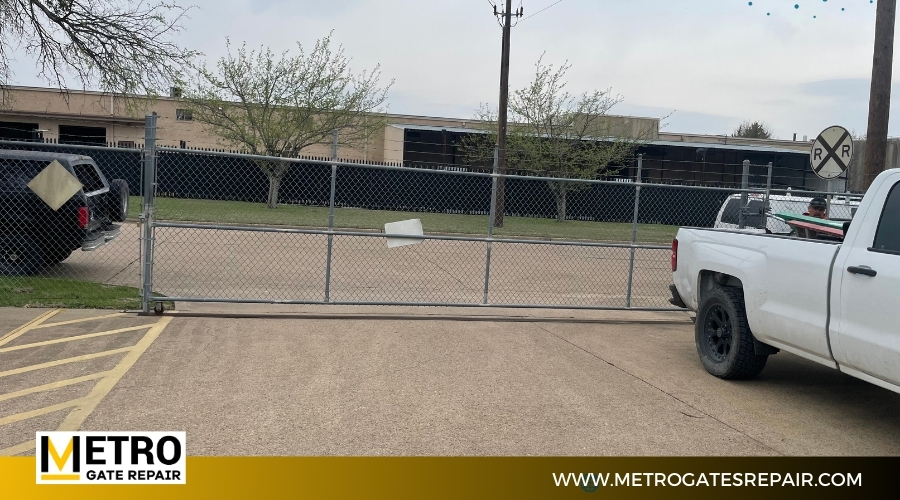
Your gate hesitated this morning — took three seconds longer than usual to swing open, made a low grinding noise, then stopped halfway. You hit the remote again and it finished the job. You told yourself it was fine. It wasn’t. Knowing the signs your gate needs repair or replacement before that half-open gate becomes a fully stuck one is the difference between a two-hour service call and a full weekend project. Here’s exactly what happens when we roll up to a gate call in Dallas, and what you should be watching for at every stage. What a Gate Service Call Actually Looks Like from Start to Finish Understanding the anatomy of a service call tells you a lot about what a qualified technician is actually doing — and what you should be paying attention to when they arrive. Dispatch When you call, we’re asking you two things: what is the gate doing (or not doing), and how long has it been doing it. Duration matters more than most people realize. A gate that’s been grinding for six months has done a lot more damage than one that started yesterday. We’re already forming a theory before the truck leaves the yard. Arrival and First Look The first thing a tech does is watch the gate move — or try to move — before touching anything. We want to see it in its current condition, not after we’ve manually released the arm or pushed it open. We’re looking at the swing arc, the speed, any wobble, and where it stops. That 30-second observation tells us more than a customer description ever could. Assessment Next comes the physical inspection: hinges, rollers, track, welds, the control board, the sensor eyes, the battery backup, and the loop detector if there is one. We’re also checking the gate frame itself for stress fractures and rust. In Dallas, the heat cycles and occasional ice storms do real damage to metal over time. A gate that looks fine on the surface can have a cracked weld at the bottom hinge that’s been flexing for two years. Execution Most repairs happen right there on-site. Motor replacements, hinge re-welding, track realignment, sensor replacements, control board swaps — we carry the most common parts on the truck. If the job is bigger (full gate replacement, new post installation, concrete work), we’ll walk you through the scope, give you a written estimate, and schedule accordingly. Cleanup and Invoice Before we leave, we cycle the gate three to five times and confirm it’s operating within normal parameters. You should be standing there watching it too — ask questions during this phase. Then we walk you through what was done, what was replaced, and what to watch for going forward. The Warning Signs We Find Most Often on Dallas Gates We’ve been diagnosing gate problems across Dallas for over a decade. These are the red flags that show up again and again — and the ones homeowners most often dismiss until the gate stops entirely. Slow or hesitant movement. If your gate used to open in eight seconds and now takes twelve, the motor is working harder than it should. That extra load is usually caused by a worn roller, a sagging hinge, or debris in the track. Left alone, it burns out the motor. Grinding or scraping sounds. Metal-on-metal contact means something has shifted out of alignment. This is especially common on sliding gates where the rollers wear down and the gate drops slightly onto the track. Gate reversing before it fully opens or closes. The safety sensors (photo eyes) are either dirty, misaligned, or failing. In dusty Dallas summers, photo eyes get coated in grime faster than you’d expect. Clean them first — but if that doesn’t fix it, the alignment or the board itself may be the issue. Remote works intermittently. Before you blame the remote, check the control board’s antenna wire. In Texas heat, the insulation on that wire can crack and cause signal dropout. It’s a five-minute fix if caught early. Visible rust or cracks at the welds. This is the big one. Surface rust on a painted gate is cosmetic. Rust at a weld joint — especially at the hinges or where the frame meets the post — is structural. We’ve seen gates fall off their posts entirely because a bottom hinge weld rusted through unnoticed. Gate sits crooked or doesn’t latch flush. The post may have shifted, especially if you’ve had heavy rain or the soil around the base is clay-heavy. Dallas clay soil expands and contracts dramatically with moisture, and that movement torques posts over time. Repair vs. Replacement: How We Make the Call On-Site This is the question every homeowner wants answered honestly, and here’s the framework we actually use. Repair makes sense when: The structural frame is sound (no cracked welds at primary stress points) The gate is less than 12–15 years old The failure is isolated to one component (motor, sensor, hinge) The repair cost is under 50% of replacement cost Replacement makes more sense when: Multiple components are failing simultaneously — that’s the gate telling you it’s done The frame is warped or welded repairs have been done two or more times to the same joint The gate no longer fits the opening correctly due to post movement You want to upgrade to automatic driveway gates in Dallas, where modern operators are significantly more reliable than what was installed 15+ years ago One honest truth: we’d rather repair than replace, because repairs are faster and simpler for us too. When we recommend replacement, it’s because the math genuinely doesn’t favor repair. For driveway gate repair dallas situations that are borderline, we’ll show you both options side by side so you can make the call. Looking for Professional Gate Repair You Can Depend On? We provide
