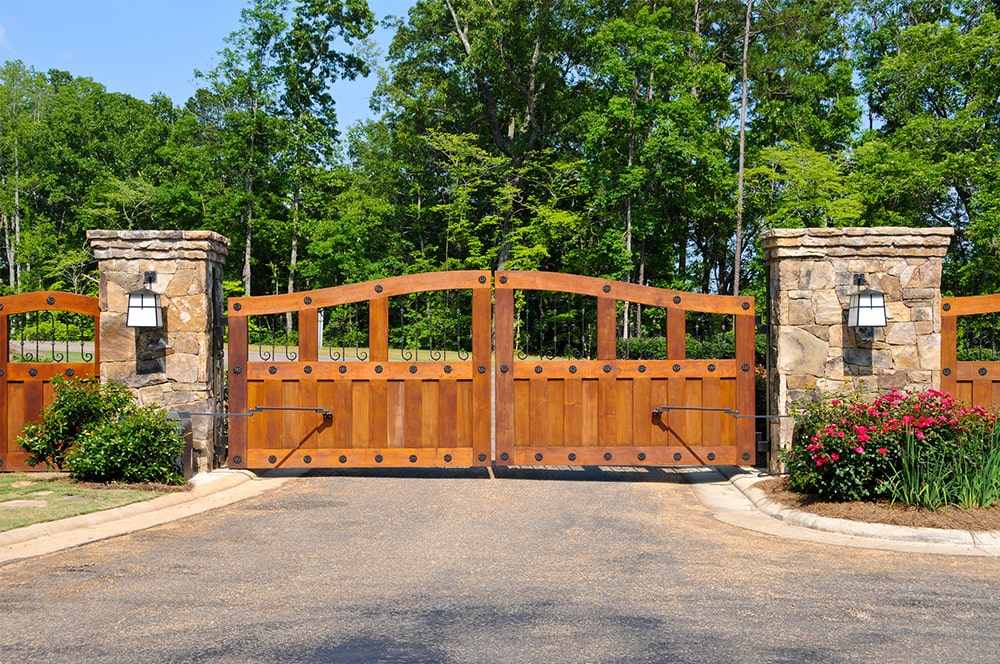
Five years ago, almost every residential call we took in Dallas was about a swing gate — two panels, ornamental iron, maybe a simple keypad. Today, at least four out of every ten new installs we handle are sliding gates. That shift didn’t happen by accident. Lot sizes are getting tighter, driveways are getting shorter, and homeowners are doing a lot more research before they buy. If you’re trying to figure out the sliding vs swing driveway gate which is better debate for your own property, that research has landed you in the right place. Let’s break it down honestly, without a sales pitch.
How homeowner preferences have shifted over the last five years
When we first started fielding calls about auto driveway gates in the Dallas market, swing gates were the default for a simple reason: they were cheaper to manufacture and easier to install. Most gate companies pushed them, and most homeowners accepted them without question.
What changed? A few things converged at once.
First, Dallas neighborhoods started filling in. Properties that once had wide-open front yards now have mature landscaping, longer vehicles, and narrower turning radii. A swing gate needs room to arc — and that room is disappearing.
Second, electric automation became far more accessible. The price of a quality gate operator dropped significantly over the last decade, making powered sliding gates competitive in a price range that used to belong exclusively to swing gates.
Third, homeowners started comparing notes online and noticed that sliding gates, once reserved for commercial properties, actually solve a lot of the frustrations that swing gate owners report: gates blown open by wind, panels scraping gravel driveways, and operators straining against gravity on sloped entries.
The result is a more informed buyer who wants to understand both options before committing. That’s exactly what we’re going to walk through.
How each gate type actually works — and where it shines
Swing gates
A swing gate is hinged on one or both sides of the driveway opening and pivots outward (or inward) to open. Single-swing gates have one panel; bi-parting swing gates split in the middle and open like double doors.
They’re elegant, they photograph beautifully, and they suit wider driveways with flat, level approaches. The operator attaches to each panel via an arm mechanism or underground actuator. When everything is properly balanced and the ground is level, a swing gate runs smoothly for years.
Sliding gates
A sliding gate travels horizontally along a track mounted at the base of the opening. The panel rolls to one side, parallel to your fence line, to clear the driveway. Cantilever-style sliding gates take this further — the panel is counterbalanced and doesn’t touch the ground at all, making them ideal for gravel, uneven surfaces, or driveways where a ground track would be impractical.
Sliding gates shine on sloped driveways, tight lots, and any situation where you simply don’t have the clearance for a swinging panel. They’re also the dominant choice for most commercial applications because of their reliability under heavy daily use.
Space requirements: the factor that often decides everything
This is where most homeowners make their first real decision — not on style, but on geometry.
Swing gate clearance: A swing gate needs open space equal to the width of the panel in the direction it opens. A 14-foot single-panel swing gate needs roughly 14 feet of clear, obstacle-free space in front of or behind it. Add a vehicle sitting in the driveway, a garden bed close to the entry, or a parked car on the street, and suddenly that swing radius becomes a problem.
Sliding gate clearance: A sliding gate needs run-back space along the fence line — roughly 1.2 to 1.5 times the gate width on the side it slides to. So a 14-foot sliding gate needs about 17–21 feet of fence line to park against. If your lot has that linear space, you’re set. If your fence line is short and your driveway space is ample, a swing gate may actually be the better fit.
The honest answer is this: measure both dimensions before you fall in love with either style. We’ve seen homeowners buy a beautiful bi-parting swing gate only to discover their driveway incline means it drags the ground every time it opens.
Looking for Professional Gate Repair You Can Depend On?
We provide prompt service and guaranteed quality. Call Now (972) 947-9559
Sliding vs swing driveway gate cost breakdown
Let’s talk numbers, because this is where confusion runs high.
Swing gate costs in the Dallas area typically range from $1,800 to $4,500 for the gate itself, depending on material (wrought iron, steel tube, aluminum) and panel width. Add an automated operator and you’re looking at $2,800 to $6,500 fully installed for a standard bi-parting residential setup.
Sliding gate costs run a bit higher on average. The gate panel, track hardware, and cantilever components cost more to fabricate. Expect $3,000 to $6,000 for the gate and hardware, with full electric automation bringing the total to $4,500 to $9,000 or more for a quality residential install.
The sliding driveway gate cost premium is real — but so is the longevity advantage. Because sliding gates put less mechanical stress on their operators (no fighting gravity on a heavy panel), the motors tend to last longer between services. Over a 10-year window, the total cost of ownership can actually be comparable.
Electric gate for driveway cost also varies based on the access control system you add — keypads, intercoms, phone-to-gate apps, and loop detectors all add to the bottom line regardless of gate style.
For the most accurate quote on your specific driveway, check out our full range of driveway gates Dallas services — we assess the site before giving any numbers.
Which gate type holds up better in Dallas conditions
Dallas weather puts gates through a workout. Summers push triple digits, spring brings severe thunderstorms with sustained winds, and we get enough freeze-thaw cycles in winter to stress hardware and welds.
Wind loading is where sliding gates earn serious points. A swing gate panel acts like a sail in a strong storm — if the operator isn’t strong enough to hold it closed, or if the wind catches it while it’s mid-swing, you get bent arms, stripped gears, or a panel torn off its hinges. We document common gate problems regularly, and wind damage to swing gates spikes every spring in the DFW area.
Sliding gates, particularly cantilever designs, present less surface area to the wind during operation and are generally more stable when parked in the closed position.
Ground movement is another factor. Dallas clay soil expands and contracts with moisture, which shifts fence posts and concrete footings over time. Swing gate hinges are especially sensitive to post movement — even a quarter-inch shift can throw alignment off enough to cause the gate to bind or drag. Sliding gates on a well-set track handle minor ground movement more gracefully.
Maintenance needs: Both styles need periodic attention. Swing gate hinges need lubrication and alignment checks. Sliding gate tracks need to be kept clear of debris. Neither is maintenance-free, but gate installation done correctly from the start significantly reduces how often you’ll need a service call.
Electric automation: what’s different for each style
Automation is almost a given for residential driveway gates today, so it’s worth understanding how the two styles differ mechanically.
Swing gate operators use either an articulating arm that pushes and pulls the panel, or an underground linear actuator that’s hidden below the pivot point. Underground actuators are cleaner looking but more expensive to service when they fail. Arm-style operators are more accessible but visible.
Sliding gate operators use a rack-and-pinion drive system — a toothed rail mounted to the gate panel meshes with a gear in the motor unit mounted at the post. This system is robust and well-suited for heavy daily cycles.
Both styles can integrate with the same access control options: keypads, card readers, intercoms, remote fobs, and smartphone apps. If your current setup has an existing electric gate that needs attention, our electric gate repair Dallas team handles all major operator brands and both gate configurations.
One key difference: swing gate operators are more sensitive to gate weight and wind resistance. If you add decorative elements that increase panel weight after installation, you may need a stronger motor. Sliding gate motors are more forgiving of weight variations, which makes future modifications easier.
Frequently Asked Questions
Can I install a sliding gate if my driveway is on a slope?
Yes — and in many cases a sliding gate is the better choice for a sloped driveway. A cantilever sliding gate doesn’t use a ground track at all, so grade changes don’t affect its operation. Swing gates on slopes require careful adjustment and often a stronger operator to prevent gravity from forcing the panel open or shut.
What’s the typical sliding driveway gate cost compared to swing in Dallas?
Expect to pay roughly $1,000 to $2,500 more for a sliding gate setup versus a comparable swing gate when you factor in hardware and installation. That gap narrows over time due to lower maintenance frequency on sliding gate operators.
Which gate is more secure?
Both can be made highly secure. The critical factor is the locking mechanism and operator strength, not the gate style itself. Sliding gates do have a slight edge because they’re harder to force open — there’s no hinge point to attack and the panel’s weight keeps it firmly in the track.
How long does each type last?
With proper installation and annual maintenance, quality ornamental iron or steel gates of either style should last 20–30 years. The operators (motors) typically have a 10–15 year lifespan depending on cycle count and maintenance.
Can I switch from a swing gate to a sliding gate without replacing my fence?
Sometimes, but not always. It depends on your fence post placement and available run-back space along the fence line. We assess this during a site visit — there’s no universal answer.
Ready to stop second-guessing and get a real recommendation for your specific driveway? Our team at Metro Gate Repair has helped hundreds of Dallas-area homeowners make this exact decision — and we’ll tell you straight which style fits your lot, your budget, and your daily routine. Call us today or request a quote for a no-pressure site assessment anywhere in the Dallas–Fort Worth area. Same-day consultations are available for most locations.