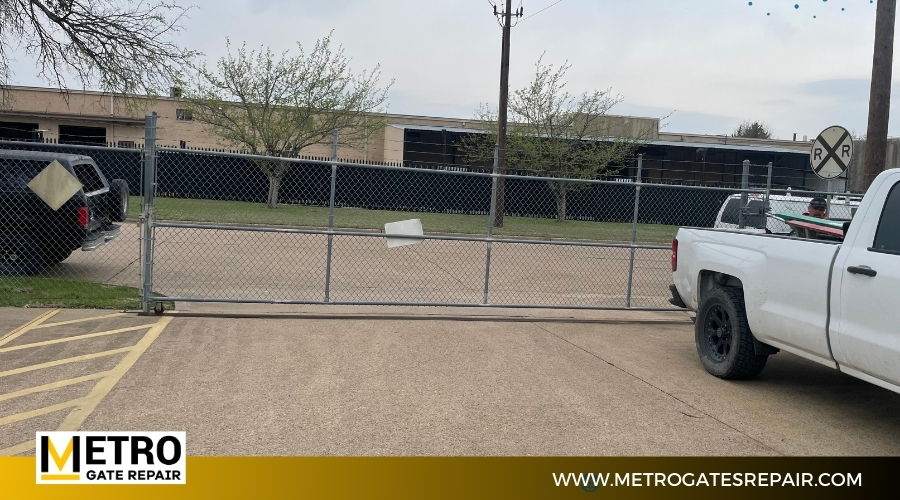
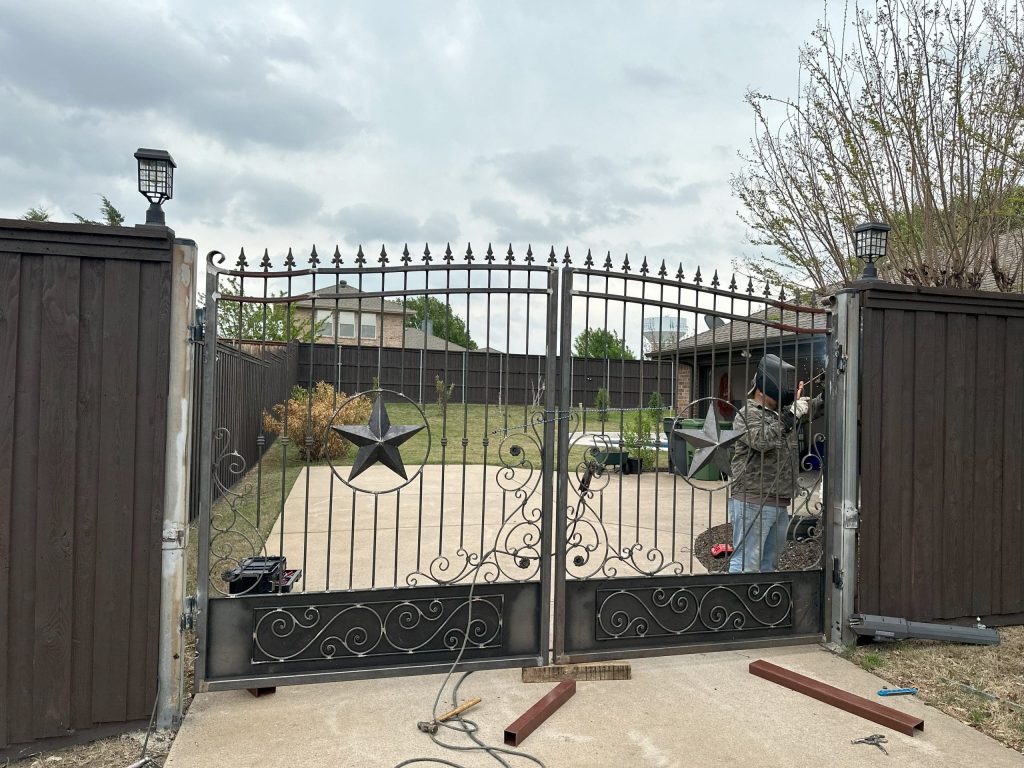
Your gate hesitated this morning — took three seconds longer than usual to swing open, made a low grinding noise, then stopped halfway. You hit the remote again and it finished the job. You told yourself it was fine. It wasn’t. Knowing the signs your gate needs repair or replacement before that half-open gate becomes a fully stuck one is the difference between a two-hour service call and a full weekend project.
Here’s exactly what happens when we roll up to a gate call in Dallas, and what you should be watching for at every stage.
What a Gate Service Call Actually Looks Like from Start to Finish
Understanding the anatomy of a service call tells you a lot about what a qualified technician is actually doing — and what you should be paying attention to when they arrive.
Dispatch
When you call, we’re asking you two things: what is the gate doing (or not doing), and how long has it been doing it. Duration matters more than most people realize. A gate that’s been grinding for six months has done a lot more damage than one that started yesterday. We’re already forming a theory before the truck leaves the yard.
Arrival and First Look
The first thing a tech does is watch the gate move — or try to move — before touching anything. We want to see it in its current condition, not after we’ve manually released the arm or pushed it open. We’re looking at the swing arc, the speed, any wobble, and where it stops. That 30-second observation tells us more than a customer description ever could.
Assessment
Next comes the physical inspection: hinges, rollers, track, welds, the control board, the sensor eyes, the battery backup, and the loop detector if there is one. We’re also checking the gate frame itself for stress fractures and rust. In Dallas, the heat cycles and occasional ice storms do real damage to metal over time. A gate that looks fine on the surface can have a cracked weld at the bottom hinge that’s been flexing for two years.
Execution
Most repairs happen right there on-site. Motor replacements, hinge re-welding, track realignment, sensor replacements, control board swaps — we carry the most common parts on the truck. If the job is bigger (full gate replacement, new post installation, concrete work), we’ll walk you through the scope, give you a written estimate, and schedule accordingly.
Cleanup and Invoice
Before we leave, we cycle the gate three to five times and confirm it’s operating within normal parameters. You should be standing there watching it too — ask questions during this phase. Then we walk you through what was done, what was replaced, and what to watch for going forward.
The Warning Signs We Find Most Often on Dallas Gates
We’ve been diagnosing gate problems across Dallas for over a decade. These are the red flags that show up again and again — and the ones homeowners most often dismiss until the gate stops entirely.
Slow or hesitant movement. If your gate used to open in eight seconds and now takes twelve, the motor is working harder than it should. That extra load is usually caused by a worn roller, a sagging hinge, or debris in the track. Left alone, it burns out the motor.
Grinding or scraping sounds. Metal-on-metal contact means something has shifted out of alignment. This is especially common on sliding gates where the rollers wear down and the gate drops slightly onto the track.
Gate reversing before it fully opens or closes. The safety sensors (photo eyes) are either dirty, misaligned, or failing. In dusty Dallas summers, photo eyes get coated in grime faster than you’d expect. Clean them first — but if that doesn’t fix it, the alignment or the board itself may be the issue.
Remote works intermittently. Before you blame the remote, check the control board’s antenna wire. In Texas heat, the insulation on that wire can crack and cause signal dropout. It’s a five-minute fix if caught early.
Visible rust or cracks at the welds. This is the big one. Surface rust on a painted gate is cosmetic. Rust at a weld joint — especially at the hinges or where the frame meets the post — is structural. We’ve seen gates fall off their posts entirely because a bottom hinge weld rusted through unnoticed.
Gate sits crooked or doesn’t latch flush. The post may have shifted, especially if you’ve had heavy rain or the soil around the base is clay-heavy. Dallas clay soil expands and contracts dramatically with moisture, and that movement torques posts over time.
Repair vs. Replacement: How We Make the Call On-Site
This is the question every homeowner wants answered honestly, and here’s the framework we actually use.
Repair makes sense when:
The structural frame is sound (no cracked welds at primary stress points)
The gate is less than 12–15 years old
The failure is isolated to one component (motor, sensor, hinge)
The repair cost is under 50% of replacement cost
Replacement makes more sense when:
Multiple components are failing simultaneously — that’s the gate telling you it’s done
The frame is warped or welded repairs have been done two or more times to the same joint
The gate no longer fits the opening correctly due to post movement
You want to upgrade to automatic driveway gates in Dallas, where modern operators are significantly more reliable than what was installed 15+ years ago
One honest truth: we’d rather repair than replace, because repairs are faster and simpler for us too. When we recommend replacement, it’s because the math genuinely doesn’t favor repair. For driveway gate repair dallas situations that are borderline, we’ll show you both options side by side so you can make the call.
Looking for Professional Gate Repair You Can Depend On?
We provide prompt service and guaranteed quality. Call Now (972) 947-9559
When an Automatic Gate Is the Real Problem — Not the Motor
A lot of Dallas homeowners assume that when their automatic gate stops working, the motor has died. That’s actually one of the less common causes we find. Here’s what’s more likely:
Dead or weak battery backup. Most gate operators have a battery that keeps them running during a power outage. When that battery starts failing, the gate behaves erratically — especially in the morning before the solar charger has topped it off. Replacing the battery (usually $40–$80) fixes it completely.
Tripped circuit breaker or blown fuse on the control board. Power surges from Dallas thunderstorms trip these constantly. Check your breaker box and the fuse on the board itself before calling.
Loop detector issues. If your gate uses an in-ground loop for vehicle detection, a crack in the driveway pavement can break the wire loop and cause the gate to behave unpredictably. This one requires a tech with a loop detector tester.
Obstruction in the travel path. A fallen tree branch, a forgotten trash can, even a garden hose left in the wrong spot will trigger the safety reverse. The gate isn’t broken — it’s doing its job.
For issues that go deeper than these quick checks, our electric gate repair dallas service covers full diagnostics on operators, control boards, sensors, and loop detectors.
What Gets Checked That Homeowners Usually Miss
Beyond the obvious mechanical parts, a thorough gate inspection covers things most owners don’t think about until they become problems.
Gate post plumb. We use a level on every post. A post that’s even two degrees out of plumb puts constant lateral stress on the hinge and operator arm. It’s subtle, but it shortens the life of every other component.
Entrapment protection compliance. Modern gate safety standards require specific obstruction-sensing behavior. Older gates — particularly those installed before 2010 — often don’t meet current safety expectations. If you have kids or pets, this matters.
Keypad and access hardware. Keypads get water intrusion. The membrane under the buttons degrades in Texas sun. We test every button and check the seal.
Weld integrity at stress points. We’re looking specifically at the connection between the gate frame and the swing arm bracket. That joint takes the full impact every time the gate hits the stop. Over thousands of cycles, even a good weld fatigues.
If you want to see what common issues look like before a tech arrives, our common gate problems page walks through the most frequent failures with more detail.
And if you’re still deciding which company to trust with the job, we’d encourage you to look at what a full-service gate company dallas actually provides — from same-day repair to full gate installation and sales.
Frequently Asked Questions About Gate Repair and Replacement in Dallas
How do I know if my gate problem is an emergency?
If the gate is stuck in the open position, treat it as urgent — your property is unsecured. If it’s stuck closed and you can access your property another way, it’s still important but not a same-day emergency. A gate that moves but operates slowly or noisily can usually wait a few days for a scheduled appointment.
How long does a typical gate repair take?
Most single-component repairs (motor swap, sensor replacement, hinge re-weld) take 1–3 hours on-site. More complex work like a full operator replacement with reprogramming takes 3–5 hours. Full gate replacement with new posts typically requires scheduling a second trip with a crew.
Is it worth repairing an old automatic gate or should I just upgrade?
If the frame is solid and only the operator has failed, repair almost always makes financial sense. Operators last 10–15 years on average. If the gate itself is rusted or warped, upgrading to a new automatic driveway gate gives you a fresh warranty on everything and modern safety features.
What causes gates to fail faster in Dallas specifically?
Three things: the heat (operators and control boards run hot, which shortens component life), the clay soil (post movement is a real issue here), and storm season (power surges and debris damage happen every year). Scheduling an annual inspection catches most of these issues before they become failures.
Can I do any gate maintenance myself?
Yes. Lubricate hinges and rollers every 3–6 months with a silicone-based lubricant. Keep photo eyes clean and check that the travel path is clear. Test the manual release quarterly. These three habits alone extend gate life by years.
If your gate is showing any of the warning signs above — grinding sounds, slow movement, crooked alignment, or erratic behavior — don’t wait for it to fail completely. Metro Gate Repair serves Dallas and the surrounding area with same-day service on most repairs. Call us or request a quote online today, and we’ll have a tech on-site to assess the situation and give you an honest recommendation, repair or replace.